Cervical smear testing and screening
A cervical smear examines cells collected from the cervix for changes. It is different from an HPV test. Your age, previous results and medical history determine when screening is appropriate and what happens next.
What can a smear tell you?
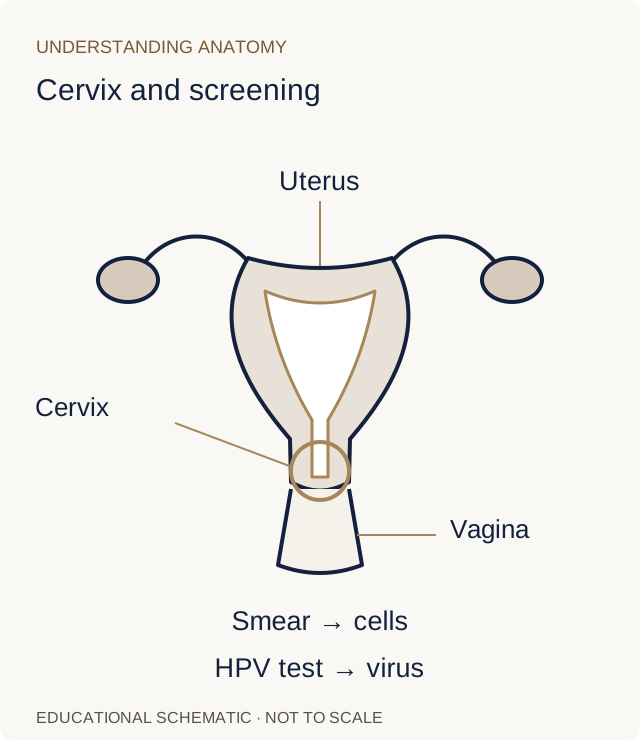
A smear, also called cervical cytology, examines the appearance of cells. An HPV test looks for certain high-risk viral types. Although both may be requested, they answer different questions.
Screening aims to identify cervical changes before symptoms develop. It is not a general cancer test and does not exclude disease of the ovaries or the lining of the womb.
How is screening scheduled?
Turkey’s population programme includes HPV-DNA screening every five years between ages 30 and 65. This does not mean that every person needs a smear at that same interval.
Previous abnormal results, cervical treatment or conditions affecting immunity can change follow-up. The type of previous hysterectomy also matters; removal of the womb alone does not establish whether further screening is needed.
Sample collection and preparation
A speculum is placed in the vagina and a small brush collects cells from the cervix. Pressure or discomfort can occur. Explain any pain, previous difficult examination or menopausal sensitivity beforehand; you can ask to stop.
Tell the team about possible pregnancy, bleeding and vaginal products. Ask about timing and preparation before attending rather than stopping necessary medicines yourself.
Understanding the result
An inadequate sample, an HPV finding or cellular changes may lead to repeat testing or colposcopy for different reasons. An abnormal result does not itself diagnose cancer. Recommendations depend on the combination of findings, previous tests and individual risk.
Clarify how results will reach you and when follow-up is due. If no result arrives, contact the clinic rather than assuming it was normal.
Symptoms need assessment outside screening
Bleeding after sex, bleeding between periods, postmenopausal bleeding or persistent unusual discharge needs assessment. A recent normal screen does not explain those symptoms.
Significant bleeding, fainting or severe pain calls for prompt assessment at an appropriate healthcare service, rather than waiting for a routine online reply.
Frequently asked questions
Are a smear and an HPV test the same?
No. One examines cellular changes; the other tests for certain high-risk HPV types.
Do I need a smear every year?
Annual testing is not universal. Previous results, individual circumstances and the relevant national programme guide follow-up.
Does an abnormal result mean cancer?
No. The type of change and HPV result may lead to repeat testing, colposcopy or other assessment.
Does vaccination replace screening?
No. Vaccination does not replace the recommended screening programme.
Can screening take place during pregnancy?
Tell the team you are pregnant. Routine screening and follow-up of an abnormal result may need different timing.
What if I bleed after a normal result?
New or persistent bleeding needs separate assessment. Do not wait until your next screening date.
Sources and updates
Sources checked: 19 October 2026. Screening and service arrangements can differ between countries; your individual plan follows clinical assessment.