HPV infection, testing and follow-up
HPV is a common group of viruses. A high-risk HPV finding does not diagnose cancer; it is interpreted alongside cervical cell results and previous follow-up. The aim is to arrange appropriate checks without unnecessary alarm.
HPV types and transmission
Some types cause warts; others can be associated with cellular changes when infection persists. Cervical screening focuses on high-risk types associated with cancer risk. Not every HPV type has the same implications.
Transmission can occur through skin and mucosal contact without penetration. Because infection can remain unnoticed for years, a positive test cannot establish when transmission occurred or identify its source.
Interpreting a positive test
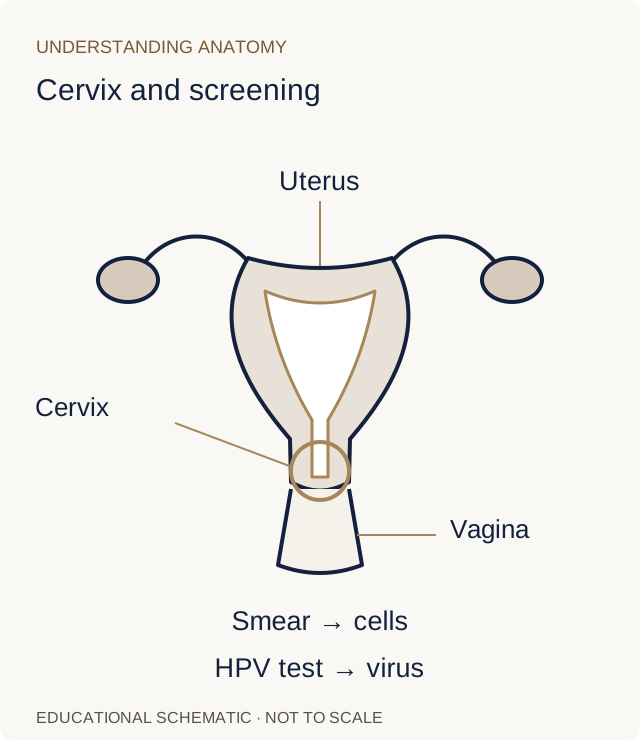
An HPV-DNA test examines a cervical sample, rather than being a routine blood test. A positive result does not necessarily mean abnormal cells are present. Cytology, viral type and previous results help determine the next step.
Follow-up may involve a later repeat test or colposcopy. Following a written plan is more useful than arranging frequent tests independently without a clear clinical question.
The virus, warts and cellular changes differ
There is no standard medicine course or supplement proven to guarantee complete HPV clearance. A clinician can treat identified warts or precancerous lesions; treating a lesion is different from proving the virus has been eradicated.
The immune system controls many infections over time. Discuss smoking and any illnesses or medicines affecting immunity during follow-up.
Vaccination and prevention
Vaccination offers protection against particular types, rather than treating an existing infection or covering every type. Age, vaccination history and individual circumstances inform the decision. Current availability and arrangements in Turkey should be checked separately.
Condoms can reduce transmission but do not cover every area of contacting skin. Vaccinated people should continue appropriate cervical screening.
Making follow-up clear
Ask which test was performed, whether a cell result is available, when follow-up is due and why colposcopy has been suggested. Different intervals online may reflect different national programmes.
Bleeding, persistent discharge, visible lesions or pain should not be explained solely by the HPV result. These symptoms may need separate assessment.
Frequently asked questions
Does HPV positivity mean cancer?
No. Persistent high-risk infection and cellular changes can require follow-up; one positive test does not diagnose cancer.
Can the test date an infection?
No. HPV can remain undetected for a long time, so the result cannot date transmission.
Can I have HPV without warts?
Yes. Infection is often symptomless, and high-risk types in screening differ from the usual wart-related types.
Will vaccination clear existing HPV?
It does not treat an existing infection, although it can protect against certain types not previously encountered.
Does every positive result need treatment?
No. Monitoring or investigation depends on the full results; positivity alone is not an indication for surgery.
What if I miss follow-up?
Contact the clinic to rearrange and have your previous report available. Having no symptoms does not remove the need for follow-up.
Sources and updates
Sources checked: 19 October 2026. Screening and service arrangements can differ between countries; your individual plan follows clinical assessment.