Colposcopy and cervical assessment
Colposcopy is a magnified examination of the cervix. It may follow an abnormal screen or particular symptoms. Examination, biopsy and treatment are separate steps, and not everyone needs all of them.
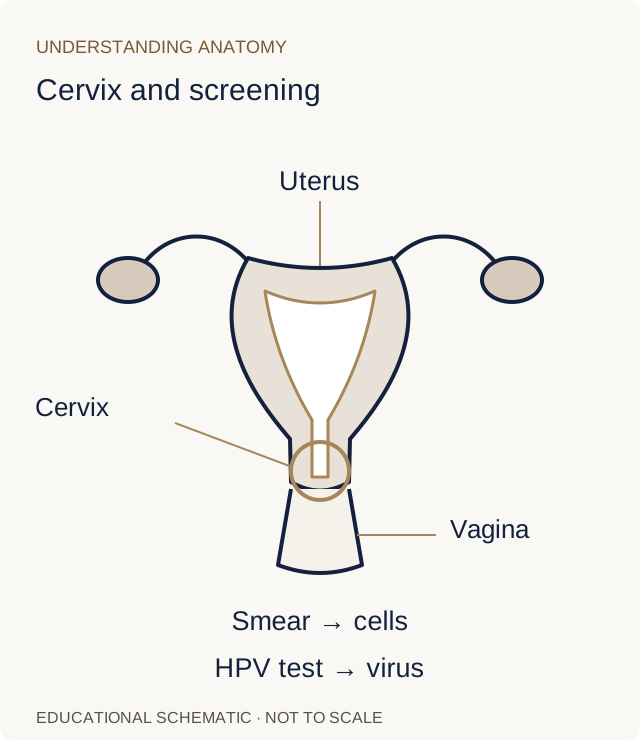
Why might colposcopy be recommended?
A closer examination may be appropriate after considering high-risk HPV and cellular changes together. Bleeding after sex or the appearance of the cervix can also prompt assessment.
The reason for referral, the area being examined and the circumstances for taking a biopsy should be explained. Referral does not mean that you have cancer.
What happens during the examination?
A speculum makes the cervix visible. The magnifying colposcope remains outside the body; its camera is not inserted into the vagina. Applied solutions help identify areas needing closer attention.
A small tissue sample may be taken for laboratory examination. The visual impression and the pathology result are different pieces of information; the final plan may wait until all results are available.
Pain, privacy and consent
Pressure, stinging or cramping can occur and experiences vary. Discuss previous painful examinations, anxiety and support needs. Each step should be explained, with the opportunity to pause or stop.
Mention pregnancy, blood-thinning medicines and signs of infection beforehand. Assessment can take place during pregnancy, but biopsy and treatment may require different planning.
Biopsy and treatment decisions
A biopsy helps identify a particular area. The grade of cellular change, earlier results and future pregnancy plans influence whether monitoring or treatment is appropriate. Tissue removal such as LLETZ/LEEP differs from examination alone.
If treatment is recommended, discuss benefits, bleeding and infection risks, effects on the cervix and implications for future pregnancies separately. Treatment on the same day is not assumed for everyone.
Aftercare and results
Spotting and aftercare differ after examination alone, biopsy or treatment. Follow instructions specific to your procedure about tampons, sex, exercise and bathing.
Increasing or heavy bleeding, offensive discharge, fever or persistent significant pain needs prompt assessment. Confirm how pathology results will reach you and when follow-up is due.
Frequently asked questions
Is referral a cancer diagnosis?
No. The examination helps determine whether a change is present and, if so, its nature.
Is a biopsy always taken?
Not always. Findings are considered alongside previous test results.
Is colposcopy the same as a smear?
No. A smear collects cells; colposcopy is a magnified examination that may include tissue sampling.
Can I stop if it hurts?
Yes. Discuss pain relief and any need to pause with the team.
Will I know the result immediately?
An initial impression may be discussed, but a biopsy requires later laboratory assessment.
When is my next screen?
The biopsy, HPV findings and previous treatment determine your individual follow-up interval.
Sources and updates
Sources checked: 19 October 2026. Screening and service arrangements can differ between countries; your individual plan follows clinical assessment.