Gynaecological laparoscopy
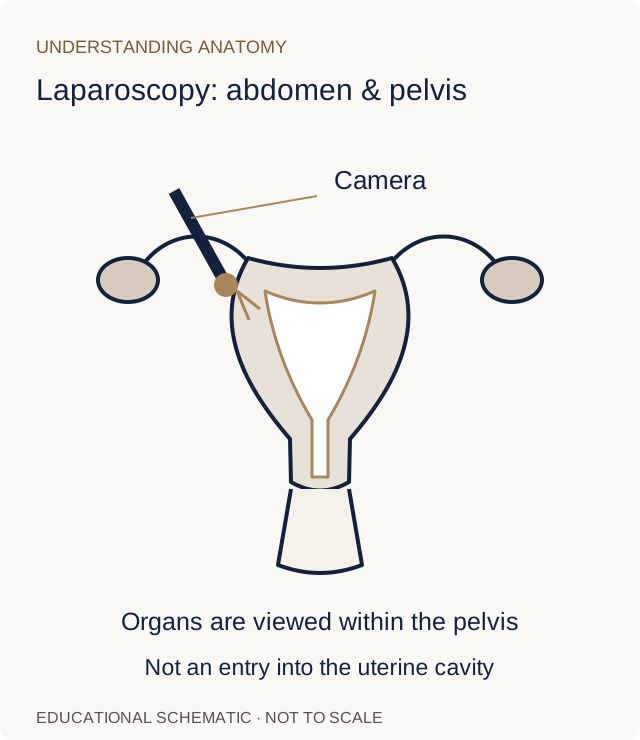
Laparoscopy uses a camera and instruments through small abdominal incisions to examine the abdomen and pelvis. It may be diagnostic or the approach used for an operation. The term keyhole surgery alone does not describe its extent or risks.
Diagnostic and operative laparoscopy
Laparoscopy may be considered for endometriosis, certain ovarian cysts and other selected gynaecological conditions. Inspection alone differs from removing a cyst or performing a hysterectomy.
It is not the first investigation for everyone with pain or infertility. Assessment considers what history, examination and imaging have already shown, and whether surgery is likely to change management.
Decisions and preparation
Discuss the exact operation, its purpose, preservation of the womb or ovaries and any pathology examination. Pregnancy plans, previous abdominal operations and medicines may affect the decision.
The hospital team plans anaesthetic assessment, fasting, medicine adjustments and support for returning home. Do not stop blood thinners or regular medicines on your own.
During laparoscopy
The procedure is usually performed under general anaesthesia. A small incision admits the camera and gas creates working space. Further small incisions may be needed for instruments.
Findings, adhesions or safety concerns may require conversion to open surgery. Discuss this possibility beforehand; small external incisions do not necessarily mean a minor internal operation.
Benefits, limitations and risks
For suitable cases, smaller incisions and a shorter recovery may be advantages. Outcomes still depend on the condition and the operation performed. Not every cause of pain is visible and complete symptom relief cannot be promised.
Counselling includes bleeding, infection, anaesthetic complications, blood clots and injury to bowel, bladder, urinary tract or blood vessels. Ovarian surgery also requires discussion of fertility and preservation of ovarian tissue.
Recovery and follow-up
Shoulder discomfort from gas, abdominal tenderness and fatigue can occur. Returning to work, driving, exercise and sex depends on the operation and individual recovery, rather than incision size alone.
Seek prompt advice for fever, increasing abdominal pain, persistent vomiting, wound problems or leg swelling. Chest pain or breathlessness requires urgent assessment. Establish when operative findings and any pathology results will be discussed.
Frequently asked questions
Is laparoscopy the same as hysteroscopy?
No. Laparoscopy examines the abdomen and pelvis; hysteroscopy enters through the cervix to examine the uterine cavity.
Can every cyst be removed laparoscopically?
The approach depends on cyst appearance, size, risk assessment and previous surgery.
Can conversion to open surgery be needed?
Yes. Findings or safety considerations may require it; this belongs in the consent discussion.
Will I go home the same day?
It may be possible for some procedures; admission depends on the operation and postoperative condition.
When can I return to work?
Recovery differs after diagnostic examination and major surgery. Advice also considers the physical demands of your job.
Will it definitely identify the cause of pain?
Not always. Normal findings or persistent pain after treatment may require the assessment plan to be reconsidered.
Sources and updates
Sources checked: 19 October 2026. Screening and service arrangements can differ between countries; your individual plan follows clinical assessment.