The menopause transition is different for everyone. Changes in periods, sleep, everyday energy and vaginal comfort can be considered together in a personal consultation.
Illustrative image
The menopause transition is different for everyone. Changes in periods, sleep, everyday energy and vaginal comfort can be considered together in a personal consultation.
Understanding changes
Perimenopause is the transition before periods stop. Hot flushes, night sweats and sleep difficulties may occur, but similar symptoms can have other causes. Age, menstrual history, medicines and existing health conditions guide assessment. Avoid assuming every change is menopause. Describing your main concern and its practical impact helps set priorities.
The consultation
Periods, sleep, vaginal dryness, sexual life and urinary concerns may be discussed. Assessment is not limited to hormone results. Previous operations and medical history help determine which checks are useful. Bring earlier results and a medicine list. If a personal topic is hard to raise, writing it down can help you remember your questions.
Support and shared decisions
Lifestyle support and hormonal or non-hormonal treatments may be considered. Hormone therapy is not prescribed identically for everyone; benefits and personal risks need discussion. Herbal products may interact with medicines. Share their ingredients with your care team before use. Ask about practicalities such as the method of use, cost, monitoring and fit with daily life.
What follow-up considers
Follow-up reviews changes in symptoms and your experience of treatment. Short notes before and after the first consultation can help describe progress. Bleeding after menopause needs assessment even if it is slight or happens once. Report significant new symptoms without waiting for a routine review. This page is not an instruction to start, stop or change medication.
Considering sleep, work and daily life
A consultation considers not only the number of hot flushes but also what they change in your life. Interrupted sleep, difficulty concentrating at work or reduced motivation to be active can create different priorities. Discuss room temperature, opportunities to rest and family responsibilities. Diet and activity should fit personal circumstances; one programme will not meet every need. Ask for support with practical small changes. Symptoms should not be treated as a failure of willpower. Share emotional difficulties too, so appropriate support can be considered alongside the gynaecological assessment.
Discussing vaginal comfort and intimacy
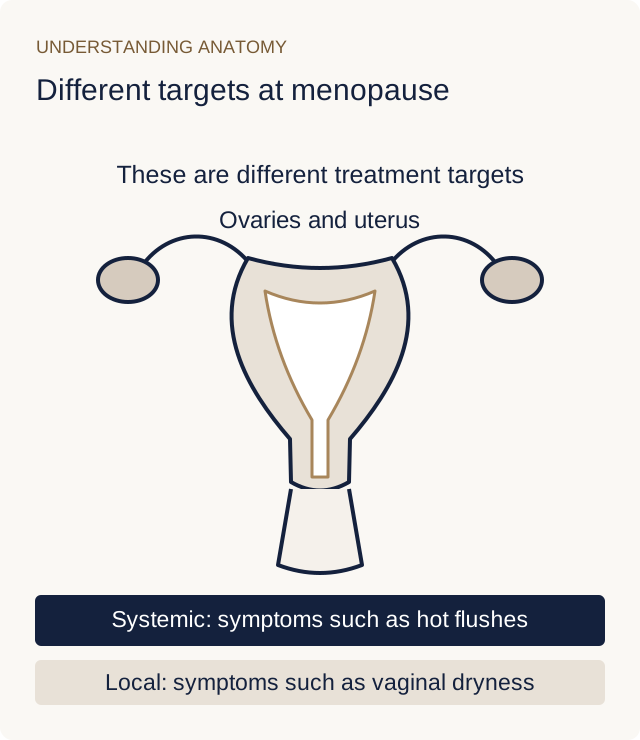
Vaginal dryness or discomfort during sex may be overlooked because it is difficult to discuss. It does not have to be accepted without assessment simply because of age. Burning, itching or pain can have different causes. Consider whether dryness also affects daily activities and what makes discomfort worse. If treatment is discussed, distinguish the aims of systemic and local approaches. Share health conditions and medicines before choosing products yourself. Changes in desire or intimacy cannot be reduced to one hormone result; comfort, relationships and emotional wellbeing also matter.
Long-term health and consultation questions
This stage can be an opportunity to review wider health needs. Ask which assessments of bone health or personal risk may be useful rather than assuming everyone needs the same tests. Contraception and the effect of hormonal methods on bleeding deserve separate discussion during the transition. Ask which symptom an option targets, when it will be reviewed and which changes require earlier contact. Suitability now does not mean a plan stays unchanged indefinitely. New conditions, medicines or preferences may prompt reassessment, keeping decisions aligned with individual needs.
Educational schematic; not an individual examination or imaging result.
The transition and bleeding changes
Cycles and symptoms can fluctuate during perimenopause. Assessment is not based on one hormone result alone; age, menstrual history and symptoms matter together. Early cessation or unusual symptoms may require different investigations.
Set separate goals for sleep, hot flushes, vaginal symptoms and bone health. The linked guide explains hormonal and non-hormonal options; new or postmenopausal bleeding needs separate assessment.
Discuss options in relation to your health history.
Ask how new symptoms should change your follow-up plan.
Follow-up, care and return to everyday activities depend on assessment and the approach chosen. Before leaving, clarify the next step and how to contact the clinic.
This information does not replace individual medical advice. Diagnosis and treatment require clinical assessment. For emergencies in Türkiye, call 112.
Urinary leakage, urgency and pelvic floor symptoms can affect everyday life. Assessment considers bladder habits, previous births and the effect on your life, rather than one symptom alone.
Changes in pelvic support can cause a vaginal bulge or a feeling of downward pressure. Assessment considers both anatomical findings and how much symptoms affect daily life.
You do not have to accept urinary leakage or pressure as an unavoidable part of life. Before a consultation, note when symptoms occur and how they affect your daily routine.
Sleep, periods and wellbeing may change during the menopause transition. Keeping notes about symptoms and their effects can help your conversation with your doctor.
Preparing questions can help you make the most of a consultation. Bring previous test results, information about operations and a list of medications if available.
 Illustrative image
 Illustrative imageSukgen · Women’s health
 Illustrative image
 Illustrative image
 Illustrative image
 Illustrative image