Hysteroscopy: examining the uterine cavity
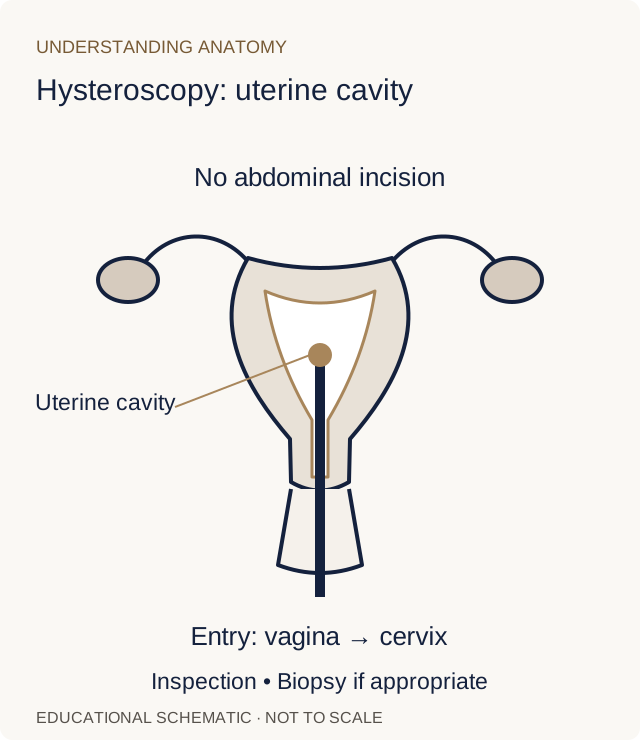
Hysteroscopy examines the uterine cavity with a slender camera passed through the cervix. It does not require an abdominal incision. Inspection, tissue sampling and removal of selected findings such as polyps may be planned together or separately.
When may it be considered?
It may be suggested for irregular or postmenopausal bleeding, suspected polyps, fibroids projecting into the cavity and other selected circumstances. The aim is direct assessment of a finding that may explain symptoms.
It is not the first or only test for every episode of bleeding. Discuss what ultrasound and, where appropriate, endometrial sampling can show. Hysteroscopy is different from an X-ray test assessing tubal patency.
Setting and pain relief options
Some diagnostic examinations can take place in an outpatient setting; more extensive procedures may require theatre. The setting depends on the procedure, health, previous experiences and your preferences.
Hysteroscopy can hurt, sometimes considerably. Discuss analgesia, local anaesthesia or, where suitable, sedation or general anaesthesia in advance. You can ask to pause or stop during the procedure.
Examination and tissue sampling
The camera passes through the cervix and fluid makes the cavity easier to inspect. The uterine lining is assessed. According to the indication and agreed consent, a biopsy may be taken or a small polyp removed.
Pathology may be needed to establish the nature of a finding. A visual impression during the examination differs from the laboratory result of a tissue sample.
Preparation, risks and alternatives
Mention possible pregnancy, infection symptoms and current medicines. Fasting requirements depend on the anaesthetic plan; preparation is not identical for every hysteroscopy. Obtain instructions from the procedure team.
Risks include cramping, bleeding, infection and rarely perforation of the uterine wall. Operative procedures also require attention to fluid balance and possible additional intervention. Deferring the procedure or choosing another investigation should be discussed in relation to the clinical question.
Results, aftercare and warning signs
Light spotting and cramps can occur. Instructions about work, exercise, tampons and sex should reflect what was done. A separate results discussion is needed after biopsy or polyp removal.
Do not wait for routine follow-up with heavy or increasing bleeding, fever, offensive discharge or worsening pain. Persistent bleeding after results are available may require further review.
Frequently asked questions
Must hysteroscopy be done without anaesthesia?
No. The setting and pain relief should reflect the procedure and individual needs.
Can it be guaranteed painless?
No. Pain varies; available options and the right to stop should be discussed beforehand.
Will a polyp be removed immediately?
Removal may occur at the same visit or separately, depending on size, location, setting and consent.
Does it show outside the womb?
No. It examines the cavity. Ovaries and the abdominal space require other assessment methods.
Is the result final immediately?
Initial findings can be discussed, but any biopsy or polyp pathology is interpreted later.
What if pregnancy is possible?
Tell the team before the procedure and obtain advice on excluding pregnancy and appropriate timing.
Sources and updates
Sources checked: 19 October 2026. Screening and service arrangements can differ between countries; your individual plan follows clinical assessment.