 Illustrative imageSukgen · Women’s health
Pelvic organ prolapse
Changes in pelvic support can cause a vaginal bulge or a feeling of downward pressure. Assessment considers both anatomical findings and how much symptoms affect daily life.
ExploreUrinary leakage, urgency and pelvic floor symptoms can affect everyday life. Assessment considers bladder habits, previous births and the effect on your life, rather than one symptom alone.
 Illustrative image
Urinary leakage, urgency and pelvic floor symptoms can affect everyday life. Assessment considers bladder habits, previous births and the effect on your life, rather than one symptom alone.
Leakage with coughing or movement and leakage following a sudden urge need different assessment. Describe when it began, its triggers and any effect on sleep. Planning your day around toilets or avoiding exercise and social activities also matters. You can share these details without embarrassment; they help explain how symptoms affect you.
Previous pregnancies, births, operations, medicines and bowel symptoms may be discussed. The purpose of an examination or test should be explained in advance. Tell the clinician about any concerns and request a pause if needed. Not everyone needs the same tests; further investigation depends on the history and findings. Bringing earlier results can help avoid unnecessary repetition.
The aim is a plan suited to the symptom pattern and your priorities. Pelvic floor training, bladder strategies, medicines or procedures may be discussed in different circumstances. Mentioning an option does not mean it suits everyone. Benefits, side effects, practicality and follow-up should be considered together. Describe how long you tried any earlier treatment and what changed.
Write down when symptoms began, their effect on daily life and your questions. A clinician may request a short bladder diary. Keep this personal health information private. Follow-up can consider comfort and quality of life as well as leakage episodes. Report new pain, blood in urine or marked difficulty passing urine without waiting for a routine review.
A diary can make it easier to recall when leakage or urgency happened and what you were doing. If requested, record the type and amount of drinks, toilet visits and circumstances of symptoms. Workdays, travel and days at home may reveal different patterns, rather than one day providing the whole answer. The diary is not a test of success and there are no right or wrong answers. Do not markedly restrict fluids or force yourself to delay toileting; ask the care team about the purpose and use of the record. Keep the notes for your consultation rather than entering personal details in website questionnaires.
Correct pelvic floor training is one supportive option discussed for certain types of leakage. Technique, duration and suitability need individual assessment. More repetitions are not automatically better. Discuss discomfort during exercises; technique or the plan may need review. Access to toilets at work, long journeys, cough or constipation can also be part of the conversation. A plan must work in daily life as well as on paper. Sharing practical obstacles helps set realistic follow-up goals. You can ask how progress will be reviewed and what to do if exercises seem difficult, without comparing your experience with someone else’s programme.
Ask what symptom pattern is suspected, which options can be considered first and how progress will be measured. If medication or a procedure is proposed, discuss its purpose, side effects and alternatives separately. Ask what the next step would be if the plan does not help. Share the names and reports of previous operations so the assessment takes them into account. A surgical technique appearing in a research paper does not establish its suitability or current recommendation for you. Preferences can change over time. Review appointments provide space to reconsider the plan as well as assess results.
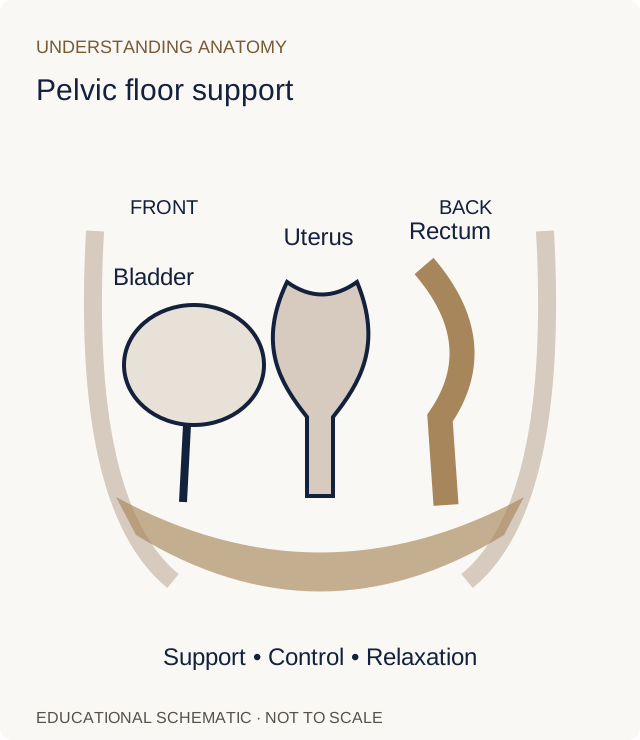
Urogynaecological assessment recognises that leakage, urgency, emptying difficulty, a vaginal bulge and bowel symptoms may coexist. Treating one symptom does not guarantee improvement in every function. A diary and personal goals help make the discussion specific.
Care may start with appropriate habit changes and pelvic floor rehabilitation, with medicines or procedures selected for the particular concern. Bring records of previous operations and implants.
No. It can occur with age, but its cause and appropriate management still deserve assessment.
No. Different approaches may be considered according to symptoms and findings.
A diary supports the consultation but does not establish a diagnosis. Discuss how long to keep it and how it will be reviewed.
Do not impose marked fluid restriction yourself. Drinking habits and symptoms should be reviewed together for individual advice.
Follow-up, care and return to everyday activities depend on assessment and the approach chosen. Before leaving, clarify the next step and how to contact the clinic.
Illustrative imageSukgen · Women’s healthChanges in pelvic support can cause a vaginal bulge or a feeling of downward pressure. Assessment considers both anatomical findings and how much symptoms affect daily life.
Explore Illustrative imageSukgen · Women’s health
The menopause transition is different for everyone. Changes in periods, sleep, everyday energy and vaginal comfort can be considered together in a personal consultation.
Explore Illustrative imageSukgen · Women’s health
You do not have to accept urinary leakage or pressure as an unavoidable part of life. Before a consultation, note when symptoms occur and how they affect your daily routine.
Explore Illustrative imageSukgen · Women’s health
Sleep, periods and wellbeing may change during the menopause transition. Keeping notes about symptoms and their effects can help your conversation with your doctor.
Explore Illustrative imageSukgen · Women’s health
Preparing questions can help you make the most of a consultation. Bring previous test results, information about operations and a list of medications if available.
ExploreReceive updates about women’s health information articles by email. Joining is entirely your choice.